


Distemper Paint vs Emulsion Paint: A Complete Comparison
Introduction
Choosing between Distemper Paint vs Emulsion Paint is one of the most common decisions homeowners, builders, and interior designers face during a new construction or renovation project. While both are widely used for interior walls, they differ significantly in appearance, durability, maintenance, cost, and overall performance.
This comparison explains the key differences between distemper and emulsion paint, helping you understand which option is better for your budget, room type, and long-term maintenance needs. From finish quality and washability to lifespan and value for money, you'll learn the strengths and limitations of each paint type so you can make an informed decision for your next painting project.
Quick Answer
For budget-conscious buyers, Distemper Paint is a cost-effective option suitable for rental properties, temporary spaces, and basic interior applications. Emulsion Paint is the better choice for homeowners seeking superior durability, smooth finishes, stain resistance, and easy maintenance. While distemper is more affordable, emulsion paint offers better long-term value due to its longer lifespan, improved washability, and premium appearance. Both paints are widely available, but emulsion paint is generally preferred for modern residential and commercial interiors.
Distemper Paint Overview
Distemper Paint is one of the oldest and most economical wall finishes used for interior painting. Traditionally made using water, chalk, lime, pigments, and binding agents, it provides a matte appearance and is commonly chosen for budget-friendly residential and commercial projects.
Modern acrylic distempers have improved durability and finish compared to traditional formulations, making them suitable for low-traffic areas and rental properties. Distemper paint is available in a wide range of colours and is easy to apply, although it generally requires more frequent repainting than emulsion paint.
Highlights
- Category: Water-based decorative paint
- Finish: Matte
- Applications: Interior walls and ceilings
- Product Types: Dry distemper, oil-bound distemper (OBD), acrylic distemper
- Availability: Widely available across India
- Key Strengths: Affordable, easy application, good colour options
- Best For: Budget renovations, rental properties, temporary interiors
Emulsion Paint Overview
Emulsion Paint is a modern water-based paint formulated using acrylic or vinyl resins, pigments, additives, and water. It has become the preferred choice for contemporary homes and commercial buildings because of its smooth finish, excellent durability, and easy maintenance.
Available in finishes such as matte, satin, silk, and soft sheen, emulsion paint provides better stain resistance, washability, colour retention, and moisture resistance than distemper. Many premium emulsions also feature low-VOC formulations, making them a healthier option for indoor environments.
Highlights
- Category: Water-based decorative paint
- Finish: Matte, satin, silk, soft sheen, and premium finishes
- Applications: Interior and exterior walls
- Product Types: Acrylic emulsion, plastic emulsion, premium emulsion, luxury emulsion
- Availability: Widely available worldwide
- Key Strengths: Durable, washable, premium finish, long lifespan
- Best For: Homes, offices, commercial buildings, luxury interiors
Distemper Paint vs Emulsion Paint: Quick Comparison Table
| Feature | Distemper Paint | Emulsion Paint |
|---|---|---|
| Paint Type | Water-based decorative paint | Water-based acrylic/vinyl paint |
| Finish | Matte | Matte, Satin, Silk, Soft Sheen |
| Appearance | Basic | Smooth and Premium |
| Durability | Moderate | Excellent |
| Washability | Limited | Excellent |
| Moisture Resistance | Moderate | High |
| Stain Resistance | Low | High |
| Crack Resistance | Moderate | Better |
| Colour Retention | Moderate | Excellent |
| Coverage | Good | Excellent |
| Drying Time | Moderate | Faster |
| VOC Level | Low | Low (varies by product) |
| Maintenance | Higher | Lower |
| Lifespan | 3–5 years* | 5–10 years* |
| Best For | Budget projects | Long-term residential and commercial projects |
Distemper Paint Product Range

Although distemper is considered an economical paint category, it is available in several formulations to suit different applications and budgets. Most leading paint manufacturers offer distemper products in multiple shades and finishes for interior use.
Common types of distemper paint include:
- Dry Distemper
- Oil-Bound Distemper (OBD)
- Acrylic Distemper
- Interior Wall Distemper
- Ceiling Distemper
- Economy Decorative Paints
- Matte Finish Distemper
- Water-Based Distemper
Distemper paint is widely used for residential interiors, rental homes, schools, offices, warehouses, and budget renovation projects. It offers good coverage and an attractive matte finish at a lower cost, making it a practical choice where affordability is the primary concern.
Emulsion Paint Product Range
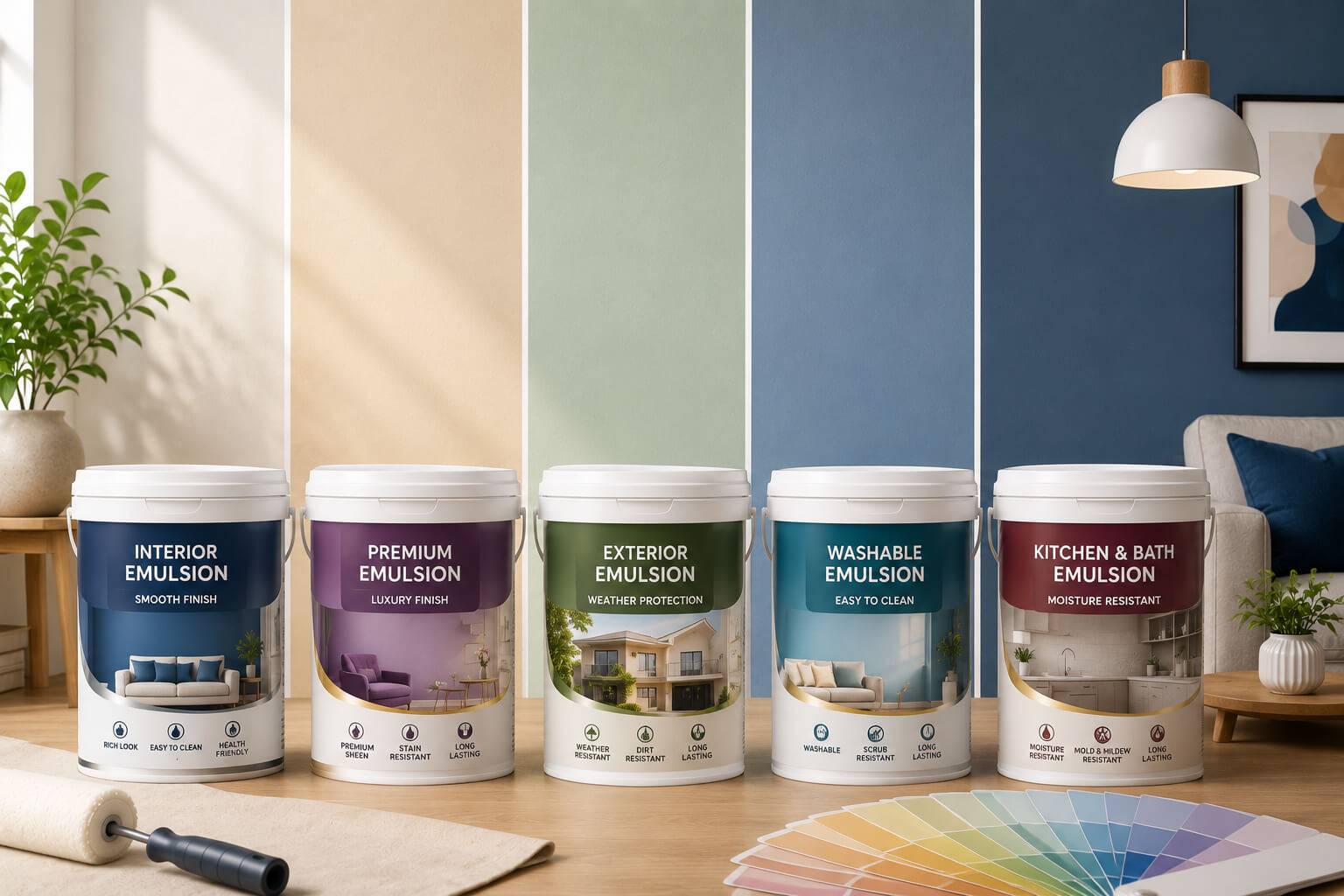
Emulsion paint is available in a much broader range of products, finishes, and performance levels than distemper. Manufacturers offer solutions for both interior and exterior applications, catering to budget, premium, and luxury segments.
Major categories include:
- Acrylic Emulsion Paint
- Plastic Emulsion Paint
- Premium Interior Emulsion
- Luxury Interior Emulsion
- Exterior Weatherproof Emulsion
- Washable Emulsion Paint
- Anti-Fungal Emulsion
- Low-VOC Emulsion
- Stain-Resistant Paint
- Anti-Bacterial Paint
- Silk Finish Paint
- Satin Finish Paint
- Matte Finish Paint
The versatility of emulsion paint makes it suitable for homes, apartments, offices, hotels, hospitals, educational institutions, and commercial buildings where durability, easy maintenance, and a premium appearance are important.
Design & Finish Comparison
The finish of a paint significantly impacts the overall look and feel of a space. While both distemper and emulsion paints are available in various shades, they differ greatly in finish quality, texture, and decorative appeal.
Distemper Paint
Distemper paint offers a simple matte finish that works well for basic interiors. It is suitable for projects where affordability is more important than premium aesthetics. However, it has limited finish options and may lose its appearance over time in high-traffic areas.
Key Features:
- Classic matte finish
- Wide range of standard colours
- Smooth appearance on properly prepared walls
- Suitable for basic residential interiors
- Limited decorative finish options
Emulsion Paint
Emulsion paint is available in multiple finishes, making it suitable for modern homes and commercial interiors. It provides a smoother, richer appearance with better colour depth and long-lasting brightness.
Available Finishes:
- Matte
- Soft Sheen
- Satin
- Silk
- Velvet
- Premium Designer Finishes
- Textured Finishes (selected products)
- Luxury Interior Finishes
Design Comparison Table
| Feature | Distemper Paint | Emulsion Paint |
|---|---|---|
| Matte Finish | Yes | Yes |
| Satin Finish | No | Yes |
| Silk Finish | No | Yes |
| Soft Sheen | No | Yes |
| Designer Finishes | Limited | Extensive |
| Colour Variety | Good | Excellent |
| Premium Appearance | Basic | Excellent |
| Luxury Options | No | Yes |
Assessment: Distemper paint is suitable for simple, cost-effective interiors, while emulsion paint offers greater design flexibility, richer colours, and premium finishes that enhance modern living spaces.
Quality Comparison
Quality determines how well a paint performs over time, including its durability, finish retention, stain resistance, and ease of maintenance.
Distemper Paint
Distemper is made using pigments, chalk, lime, water, and binding agents. Modern acrylic distempers offer better performance than traditional formulations but are still intended for basic applications.
Performance Highlights:
- Good coverage
- Matte finish
- Moderate durability
- Limited washability
- Moderate moisture resistance
- Suitable for low-traffic areas
Emulsion Paint
Emulsion paint uses acrylic or vinyl resins that create a stronger paint film, resulting in superior durability and better overall performance.
Performance Highlights:
- Excellent coverage
- Smooth finish
- Superior washability
- Better stain resistance
- Higher moisture resistance
- Better colour retention
- Longer service life
- Suitable for high-traffic areas
Quality Comparison Table
| Quality Factor | Distemper Paint | Emulsion Paint |
|---|---|---|
| Raw Materials | Chalk & Binder Based | Acrylic/Vinyl Resin Based |
| Finish Quality | Good | Excellent |
| Durability | Moderate | Excellent |
| Washability | Limited | Excellent |
| Moisture Resistance | Moderate | High |
| Stain Resistance | Low | High |
| Colour Retention | Moderate | Excellent |
| Crack Resistance | Moderate | Better |
| Indoor Air Quality | Good | Better (Low-VOC options available) |
Assessment: Emulsion paint outperforms distemper in almost every quality parameter, making it the preferred choice for homeowners looking for long-lasting performance and reduced maintenance.
Price Comparison
Price is often the deciding factor when choosing between distemper and emulsion paint. While distemper has a lower initial cost, emulsion paint offers better long-term value due to its durability and reduced repainting frequency.
Distemper Paint
Ideal for:
- Budget-friendly projects
- Rental properties
- Temporary renovations
- Low-cost interior painting
Emulsion Paint
Suitable for:
- Mid-range homes
- Premium residences
- Commercial spaces
- Long-term investments
Price Comparison Table
| Price Segment | Distemper Paint | Emulsion Paint |
|---|---|---|
| Budget | Excellent | Good |
| Mid-Range | Limited | Excellent |
| Premium | No | Excellent |
| Luxury | No | Available |
| Long-Term Value | Moderate | Excellent |
Assessment: Distemper paint costs less upfront, but emulsion paint often proves more economical over time because it lasts longer and requires fewer touch-ups.
Technology & Innovation
Modern paint technology has significantly improved durability, safety, and environmental performance. Emulsion paint benefits from continuous innovation, while distemper has also evolved with improved formulations.
Distemper Paint
Recent improvements include:
- Acrylic-enhanced formulations
- Better adhesion
- Improved colour retention
- Smoother finish than traditional distemper
- Low-odor application
Emulsion Paint
Modern emulsion paints feature advanced technologies such as:
- Low-VOC formulations
- Anti-fungal protection
- Anti-bacterial technology (selected products)
- Stain-resistant coatings
- Washable surfaces
- Quick-drying formulations
- UV-resistant pigments
- Moisture-resistant technology
Assessment: Emulsion paint leads in innovation by offering advanced performance features that improve durability, indoor air quality, and ease of maintenance.
Installation & Maintenance
Proper surface preparation is essential for achieving the best results with either paint type. However, the maintenance requirements differ significantly.
Distemper Paint
- Easy to apply
- Requires proper wall preparation
- More frequent repainting
- Difficult to clean with water
- Touch-ups may be visible
- Best for low-traffic rooms
Emulsion Paint
- Easy application with primer
- Quick drying
- Washable surface
- Easy stain removal
- Lower maintenance
- Longer repainting cycle
Maintenance Comparison
| Feature | Distemper Paint | Emulsion Paint |
|---|---|---|
| Ease of Application | Easy | Easy |
| Cleaning | Limited | Easy |
| Washability | Low | High |
| Maintenance | Higher | Lower |
| Repainting Frequency | More Frequent | Less Frequent |
| Long-Term Cost | Moderate | Lower over time |
Assessment: While both paints are easy to apply, emulsion paint offers a clear advantage in maintenance, making it a better option for busy households and commercial spaces.
Who Should Choose Which Paint?
Both distemper paint and emulsion paint have their own advantages, and the right choice depends on your budget, project type, and long-term expectations.
Choose Distemper Paint if you:
- Have a limited painting budget.
- Are painting rental properties or temporary spaces.
- Need an economical solution for low-traffic rooms.
- I want a simple matte finish without premium features.
- Plan to repaint after a few years.
Choose Emulsion Paint if you:
- I want long-lasting wall protection.
- Prefer a smooth, premium finish.
- Need washable and stain-resistant walls.
- Are painting kitchens, living rooms, bedrooms, or children's rooms.
- Value low maintenance and better colour retention.
Recommendations by Buyer Type
| Buyer | Recommended Paint | Why |
|---|---|---|
| Homeowners | Emulsion Paint | Better durability and premium appearance |
| Budget Buyers | Distemper Paint | Lower initial investment |
| Builders | Both | Depends on project budget and specifications |
| Architects | Emulsion Paint | Superior finish and design flexibility |
| Interior Designers | Emulsion Paint | Wide range of colours and finishes |
| Commercial Projects | Emulsion Paint | Long-lasting and easy to maintain |
| Rental Properties | Distemper Paint | Cost-effective for frequent repainting |
| Renovation Projects | Emulsion Paint | Better long-term value |
Expert Buying Tips
Choosing the right paint involves more than just selecting a colour. Consider these practical tips before making your decision:
- Determine your budget before comparing paint options.
- Choose emulsion paint for high-traffic areas such as living rooms and hallways.
- Use distemper for temporary renovations or rental properties where cost is a priority.
- Always apply a quality primer to improve paint adhesion and finish.
- Consider washable paints for kitchens, dining rooms, and children's bedrooms.
- Select low-VOC paints for improved indoor air quality.
- Compare coverage per litre rather than focusing only on the purchase price.
- Check the recommended surface preparation for the best results.
- Purchase paints from authorized dealers to ensure genuine products.
- Match the paint finish with the room's purpose and maintenance requirements.
Why Compare Paints on Tileswale?
Choosing the right paint becomes easier when you have access to multiple brands, products, and trusted suppliers in one place. Tileswale helps homeowners, builders, architects, interior designers, and contractors compare leading paint brands, explore product collections, connect with verified dealers and manufacturers, and request quotes with ease. Whether you're planning a home renovation or a large commercial project, Tileswale simplifies the buying process by helping you find paint solutions that match your budget, design preferences, and performance requirements.
Final Verdict
The Distemper Paint vs Emulsion Paint comparison shows that both paint types serve different purposes. Distemper paint is a practical and economical choice for budget-friendly projects, rental properties, and spaces that require a simple matte finish. Emulsion paint offers superior durability, better washability, enhanced stain and moisture resistance, and a premium appearance, making it ideal for modern homes and commercial interiors. Instead of choosing one as the overall winner, consider your budget, maintenance expectations, room usage, and desired finish. Selecting the right paint based on your specific needs will ensure better performance, long-term value, and a more satisfying painting experience.
Frequently Asked Questions
1. What is the main difference between distemper paint and emulsion paint?
Distemper paint is an economical matte finish suitable for basic interiors, while emulsion paint offers better durability, washability, stain resistance, and a smoother finish.
2. Which paint lasts longer?
Emulsion paint generally lasts 5–10 years, whereas distemper paint typically lasts 3–5 years, depending on surface preparation, environmental conditions, and maintenance.
3. Which paint is better for interior walls?
For most modern homes, emulsion paint is the preferred choice because it provides a premium finish, better durability, and easier maintenance.
4. Is distemper paint washable?
Traditional distemper paint has limited washability. Modern acrylic distempers offer improved cleaning performance but are generally less washable than emulsion paints.
5. Can emulsion paint be used on exterior walls?
Yes. Exterior-grade emulsion paints are specifically designed to withstand sunlight, rain, and changing weather conditions.
6. Is primer necessary before applying paint?
Yes. Applying a suitable primer improves paint adhesion, enhances coverage, and increases the durability of both distemper and emulsion paints.

Written By
Anand Bhoraniya
Research Specialist at Tileswale
Anand Boraniya is an Industry Specialist and Researcher at Tileswale, creating research-backed content that helps homeowners, architects, dealers, manufacturers, exporters, and importers make informed decisions. His articles provide valuable industry insights, market trends, and practical knowledge to help readers stay ahead in a rapidly evolving market.