


Interior Paint vs Exterior Paint Colors: Key Differences
Choosing the right paint colors is one of the most important decisions in any residential or commercial project. While many people focus on appearance alone, the differences between Interior Paint and Exterior Paint go far beyond color selection. Each type is designed for a specific environment and offers unique benefits related to durability, maintenance, and long-term performance.
Whether you're renovating a home, managing a commercial project, or sourcing products from a wholesale paint supplier, understanding these differences can help you make smarter decisions and achieve better results.
What Are Interior Paint Colors?
Interior paint colors are specifically formulated for indoor spaces where aesthetics, comfort, and indoor air quality matter most. These paints are designed to withstand everyday wear while maintaining their appearance over time.
Modern interior paint products often include features such as washable interior paint technology, low VOC paint options, and improved stain resistance.
Popular Interior Wall Paint Colors
Some of the most popular interior wall paint colors today include:
- Warm white shades
- Soft beige and greige tones
- Earth-inspired greens
- Light blue accents
- Muted terracotta colors
Among the latest paint color trends, homeowners increasingly prefer natural and calming tones that create a welcoming atmosphere.
For living areas, many designers recommend interior paint colors for living room walls such as warm neutrals, sage green, and soft gray because they work well with different furniture styles and décor themes.
What Are Exterior Paint Colors?
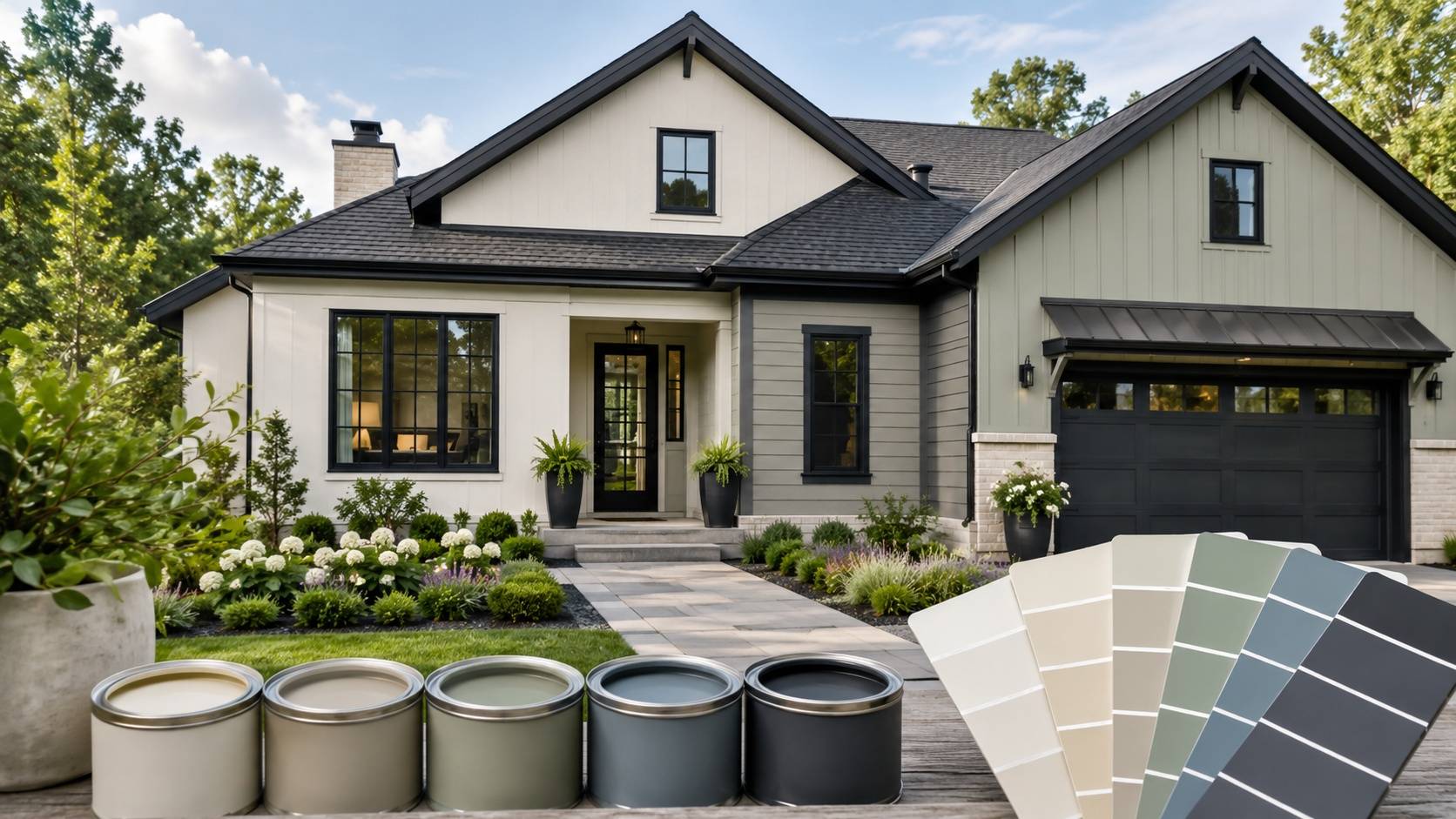
Exterior paint colors are developed to handle challenging outdoor conditions such as sunlight, rain, humidity, pollution, and temperature fluctuations.
Unlike indoor coatings, exterior paints contain additives that improve weather resistance, flexibility, and protection against fading.
Key features include:
- Weather resistant paint technology
- UV resistant exterior coatings
- Moisture resistance
- Enhanced color durability and fade resistance
Trending Exterior House Paint Colors
Current exterior house paint colors gaining popularity include:
- Charcoal gray
- Warm white
- Deep navy blue
- Sandstone beige
- Olive green
These modern exterior paint colors complement contemporary architecture while maintaining a sophisticated appearance.
Many homeowners also choose the best exterior paint colors for modern homes by combining neutral base colors with darker accents around doors, windows, and trims.
Interior Paint vs Exterior Paint Colors: Key Differences
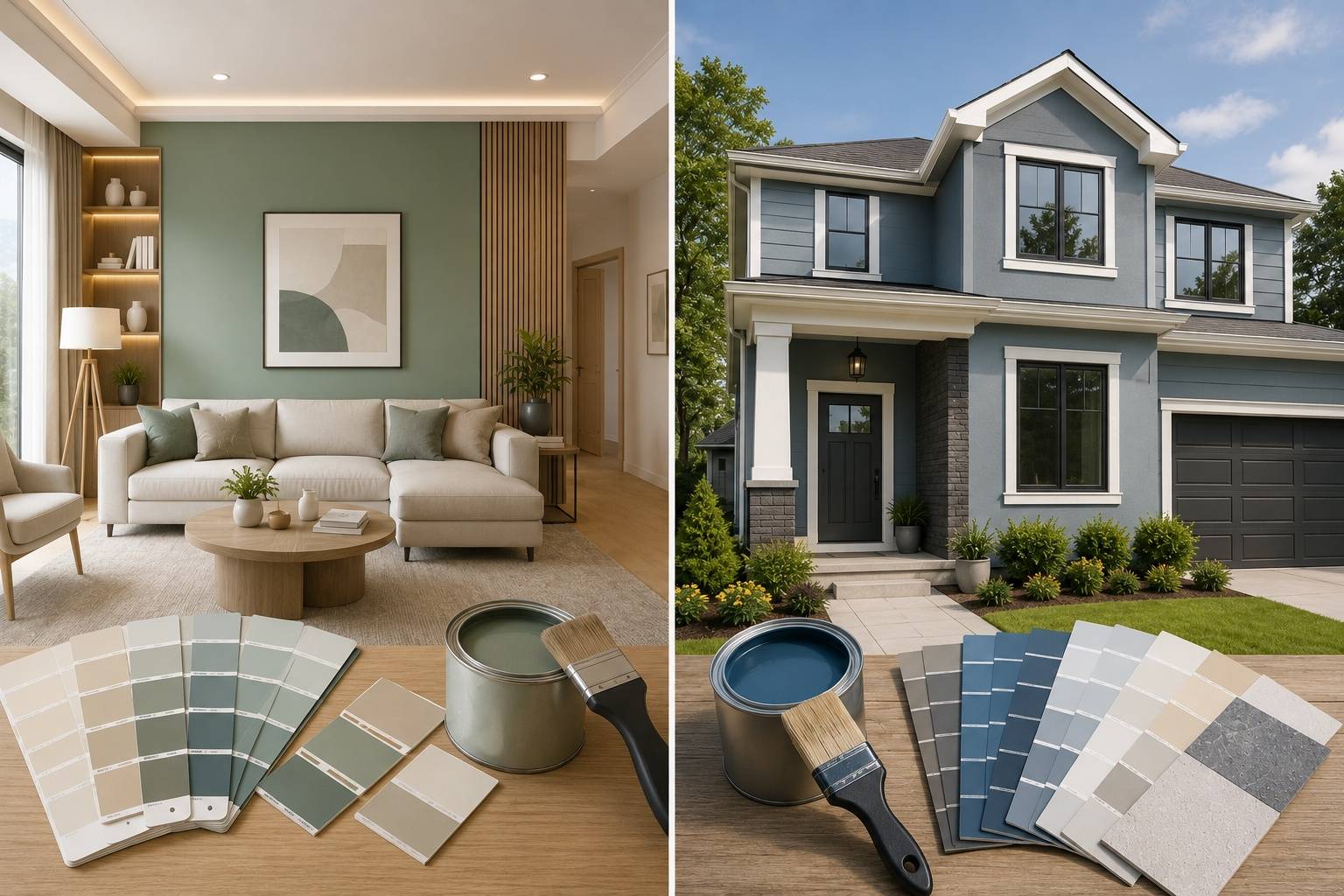
1. Purpose and Performance
The primary difference between Interior Paint and Exterior Paint lies in their intended use.
Interior paints focus on:
- Visual appeal
- Easy cleaning
- Low odor
- Indoor air quality
Exterior paints focus on:
- Weather protection
- UV resistance
- Moisture control
- Long-term durability
This difference between indoor and outdoor paint directly affects performance and longevity.
2. Paint Composition
Interior paint: Interior paint formulations are designed to resist staining and allow easy cleaning. Many premium products include washable interior paint technology that makes maintenance simple.
Exterior paints: Exterior paints contain stronger binders and protective additives that help withstand environmental stress and prevent cracking, peeling, or fading.
3. Durability Requirements
Indoor walls typically face:
- Scuffs
- Fingerprints
- Furniture contact
Outdoor surfaces face:
- Intense sunlight
- Rain
- Wind
- Dust
- Temperature fluctuations
As a result, exterior coatings require significantly higher durability levels.
4. Color Retention
Exterior paints: One of the most important factors in exterior coatings is color durability and fade resistance.
Interior paint: interior colors are protected from direct sunlight, outdoor surfaces constantly face UV exposure. High-quality UV resistant exterior coatings help maintain color vibrancy for years.
5. Color Selection Strategy
The interior vs exterior paint color selection guide varies because lighting conditions are completely different.
Indoor colors are influenced by:
- Artificial lighting
- Room size
- Furniture
- Flooring
Outdoor colors are influenced by:
- Natural sunlight
- Climate
- Surrounding landscape
- Architectural style
How to Choose Interior Paint Colors
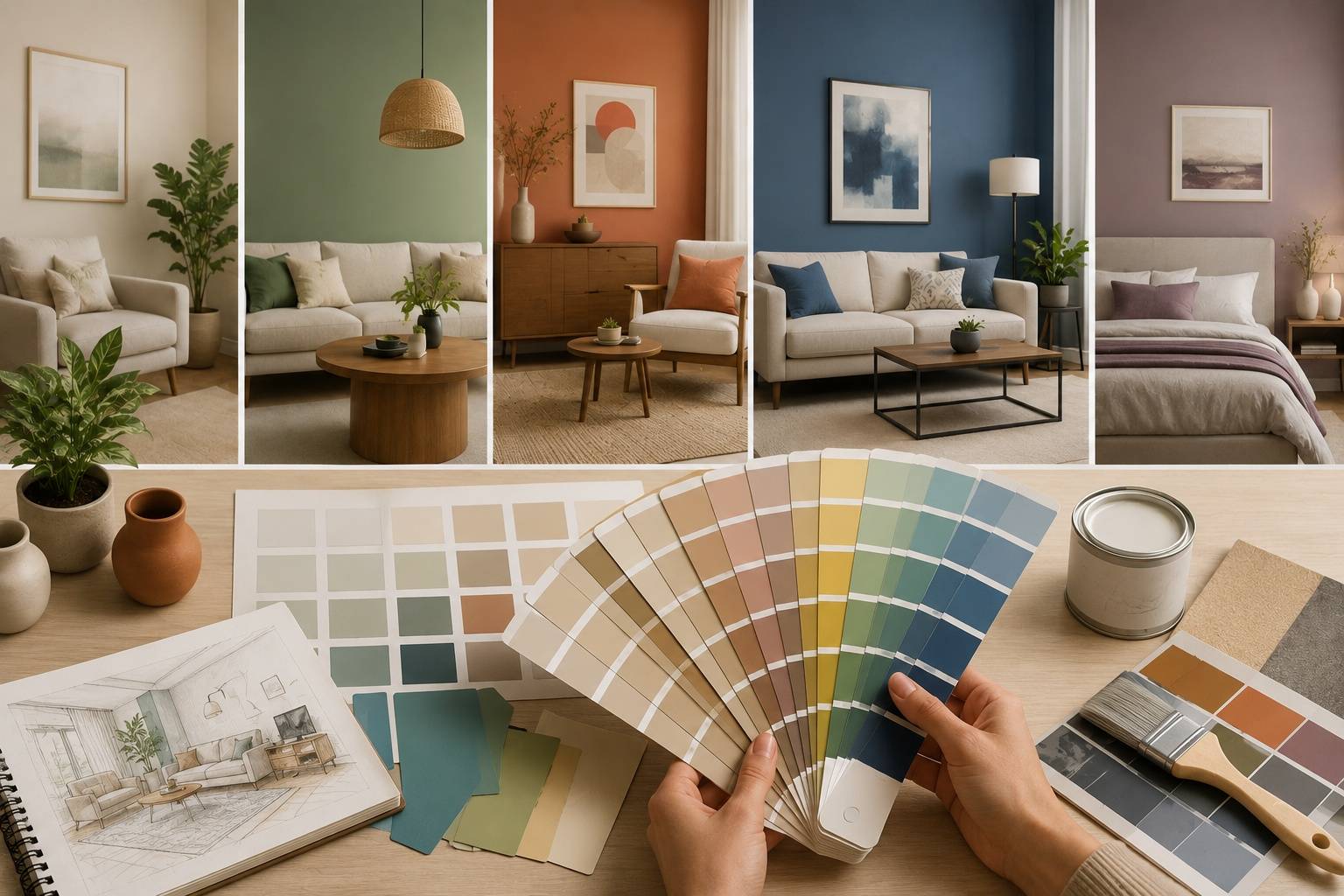
Choosing the best interior paint colors requires more than simply following trends.
Consider Color Psychology
Interior wall color psychology plays a major role in creating mood and atmosphere.
- Blue promotes relaxation
- Green creates balance
- Beige adds warmth
- Gray provides sophistication
- White enhances brightness
Evaluate Room Size
Many homeowners search for the best paint colors for small spaces because color can significantly impact perceived room dimensions.
Lighter shades help:
- Reflect light
- Create openness
- Make rooms appear larger
Match Existing Decor
Paint color combinations should complement furniture, flooring, wall coverings, and decorative elements.
Testing paint samples under different lighting conditions can help avoid costly mistakes.
How to Choose Exterior Paint Colors
Selecting exterior house paint colors requires a broader perspective.
Consider Your Climate
Climate-suitable exterior paint colors often perform better over time.
For example, exterior paint colors for hot climate regions typically include:
- Light beige
- White
- Cream
- Pale gray
These colors reflect heat and help reduce surface temperature.
Match Architectural Style
Traditional homes often look best with classic neutrals, while contemporary designs can support bolder modern exterior paint colors.
Think About Maintenance
Darker colors may absorb more heat and show fading sooner. Lighter shades generally require less maintenance and retain their appearance longer.
Following practical exterior paint maintenance tips can further extend the lifespan of painted surfaces.
Interior vs Exterior Paint Color Selection Guide
Here is a simple interior vs exterior paint color selection guide:
| Factor | Interior Paint | Exterior Paint |
|---|---|---|
| Main Use | Indoor walls and ceilings | Outdoor walls and surfaces |
| Key Need | Smooth finish and washability | Weather and UV resistance |
| Color Focus | Mood, lighting, furniture match | Climate, elevation, visibility |
| Finish Types | Matte, eggshell, satin, semi-gloss | Satin, semi-gloss, textured, weatherproof |
| Durability | Stain and scrub resistance | Heat, rain, dust, algae, fading resistance |
| Best For | Homes, offices, rooms, interiors | Elevation, boundary walls, building fronts |
Why Dealers And Bulk Buyers Should Plan Color Collections Carefully
For dealers, wholesalers, distributors, and commercial buyers, paint color selection is not only about individual homes. It is also about demand, repeat orders, fast-moving shades, regional preferences, and project suitability.
A wholesale paint supplier should keep a balanced range of interior wall paint colors, exterior house paint colors, neutral shades, premium modern shades, and climate-suitable exterior paint colors.
For commercial projects, bulk paint color supplier planning becomes even more important. Builders, contractors, architects, and project buyers often need consistent shade supply, reliable coverage, durable finish, and timely availability.
Tileswale helps buyers and sellers connect across building material categories, including paint color, tiles, sanitaryware, bathware, flooring materials, wall covering, laminates, sheets, boards, stone, and marble.
What Paint Color Trends Are Popular For Modern Spaces?
Current paint color trends are moving toward warm, natural, and premium shades. Homeowners are choosing colors that feel calm, elegant, and easy to match with modern interiors.
Popular interior paint trends include warm neutrals, soft greens, clay tones, beige, ivory, muted blues, and earthy shades. For exterior paint, modern homes are using white, grey, sand, taupe, stone colors, charcoal accents, and wood-inspired combinations.
Paint color combinations are also becoming more practical. Instead of using many bright colors, modern homes often use one base shade, one secondary shade, and one accent color.
This gives the home a cleaner and more premium look.
Buy Premium Interior and Exterior Paint
Conclusion
Selecting the right Interior Paint and Exterior Paint colors is about more than aesthetics it directly impacts durability, maintenance, comfort, and the overall value of a property. Interior paints are designed to enhance indoor spaces with beautiful finishes and easy maintenance, while exterior paints provide long-lasting protection against weather, UV exposure, and environmental conditions.
By understanding the key differences between indoor and outdoor paint applications, homeowners, contractors, architects, and dealers can make informed color and product choices for every project. From trending interior wall paint colors to climate-suitable exterior house paint colors, choosing the right combination ensures both visual appeal and long-term performance.
At TilesWale, you can explore a wide range of paint solutions, connect with trusted manufacturers and suppliers, compare products, and find the perfect colors for residential, commercial, and large-scale projects. Whether you're looking for the best interior paint colors, modern exterior paint colors, or wholesale paint suppliers, TilesWale helps simplify your search and supports smarter purchasing decisions.
FAQs
1. What is the main difference between interior and exterior paint?
Interior paint is made for indoor beauty and washability, while exterior paint is made for weather, sunlight, and moisture protection.
2. Can I use interior paint outside?
No. Interior paint may fade, peel, or crack when exposed to outdoor weather.
3. Which paint colors are best for small rooms?
Light shades like white, cream, beige, soft grey, and pastel colors make small rooms look bigger.
4. Which exterior colors are best for hot climates?
White, cream, beige, sand, and light grey are good choices for hot climate regions.
5. What is the best paint finish for interiors?
Matte, eggshell, and satin finishes are commonly used for interior walls.
6. What is the best paint finish for exteriors?
Satin, semi-gloss, and weather-resistant finishes are better for exterior walls.
7. How do I choose paint colors for my home?
Check room size, lighting, furniture, flooring, climate, and long-term maintenance before choosing colors


Written By
Anand Bhoraniya
Research Specialist at Tileswale
Anand Boraniya is an Industry Specialist and Researcher at Tileswale, creating research-backed content that helps homeowners, architects, dealers, manufacturers, exporters, and importers make informed decisions. His articles provide valuable industry insights, market trends, and practical knowledge to help readers stay ahead in a rapidly evolving market.