


Top 10 Tile Patterns to Make Your Space Look Bigger
Why Tile Patterns Matter
Tiles will transform the feeling to a room entirely. Even a small room can appear big and spacious through an appropriate tile pattern. Most individuals believe that only big rooms can be spacious yet, in most cases, it is the patterns that do the job. With intelligent design and basic visual effects, any room can be extended to be wider, taller or longer.
Tile patterns guide the eye around a room. A passageway is narrow and is filled with long lines. Shapes that are repeated give form. Light hues illuminate a gloomy space. Tiles will make a small bathroom look larger even when put in their right place. Small-space tile ideas are the simplest to begin with, should one wish to have a new appearance, but not demolish a wall.
Color choices matter, too. Light tones are more refractive hence give a room an open feeling. Light colors fit in with furniture and walls forming smooth transitions. The room is well balanced when there is collaboration between color and tile design.
Majority of the buyers now desire to view the end result first before making a choice. Digital tools come in handy there. Tileswale has provided Tilesview Visualizer which is an easy method to preview any tile layout in small rooms. Patterns, colors and styles can be tested to the user so that they can be able to find the design that makes the space look bigger.
Tileswale is a reliable market that manufacturers, wholesalers, distributors and retailers can find. It provides a wide range of styles and patterns to its users. When the right design is desired, it is easier to find it since the platform presents choices of a myriad of brands. Redesign a kitchen, a corridor, a bathroom, a living room, Tileswale assists customers in finding something suitable.
Patterns that Spreads Across the Space
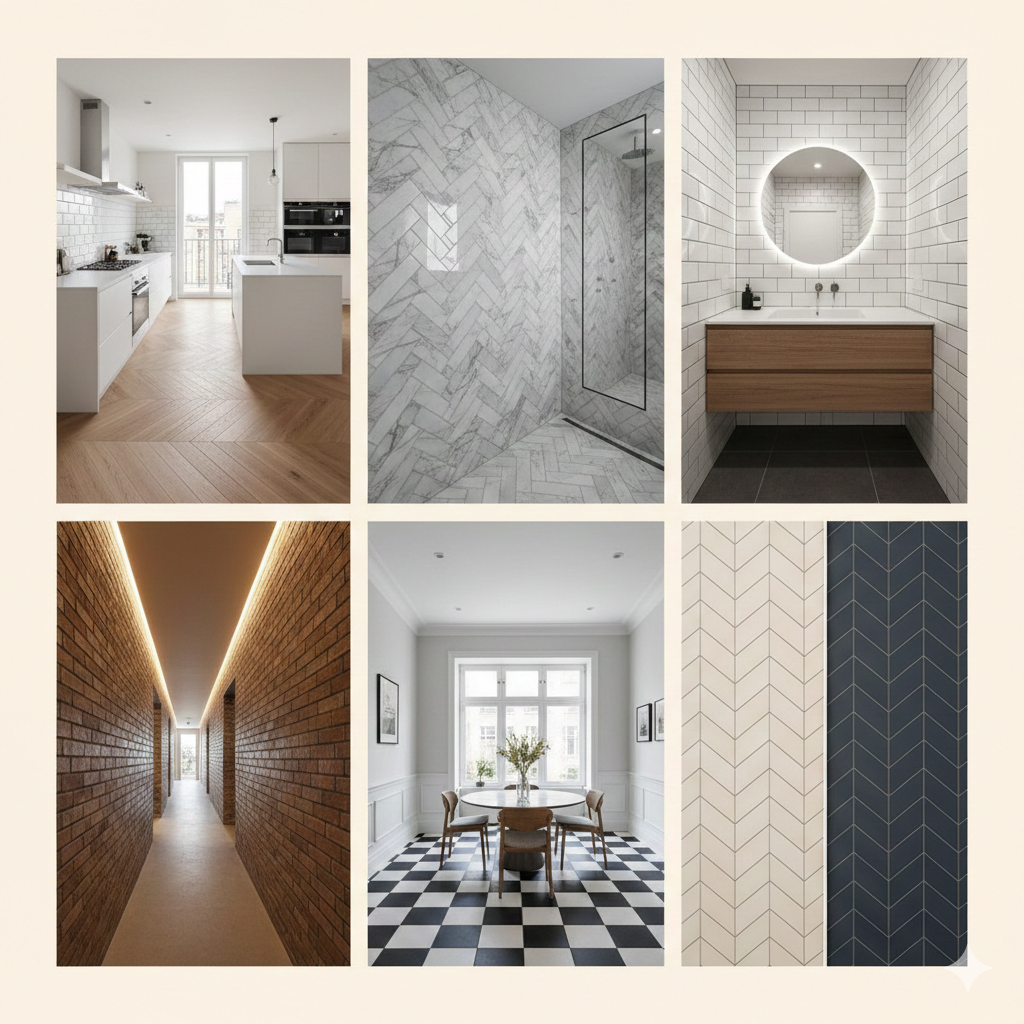
Some tile patterns stay popular because they naturally make rooms feel larger and more structured. These designs are suitable in nearly every household or business. When well-arranged they lead the eye towards the right direction, create better symmetry and make the room look longer.
The herringbone is a trustworthy design. Its zigzag design shifts the eye in a diagonally position and as such, the space seems broader. Many people use herringbone tiles in kitchens, hallways and bathrooms because the movement breaks tight spaces.
Chevron tiles create a similar effect with a sharper point. The chevron pattern provides a far-fetched appearance, which makes the rooms appear longer. Many designers put chevron tiles on large walls, kitchen backsplashes or long corridors.
Small rooms can be fitted with subway tiles. They use staggered layout which makes the walls look wider. This trend has been trending in the kitchens and bathrooms as it gives clean lines and organized appearance.
The brick-effect tiles provide great horizontal circulation opening up the tight spaces in a natural manner. They serve well in corridors and small kitchens where there might be a constraint in the height of the walls.
Patterned floors are used with a checkboard design. The alternate use of colors makes the floor appear to be a bit longer and this is a little optical illusion. This trend is evident in both residential and commercial designs since it brings character and makes the area appear to be active.
Patterns are available in a wide variety of colours and finishes. Light tones are used to make the space brighter; darker slightly contours the space. On the Tilesview Visualizer, users are able to experiment with combinations to find out which style will make their room look larger.
New Trends in Large-space Designs
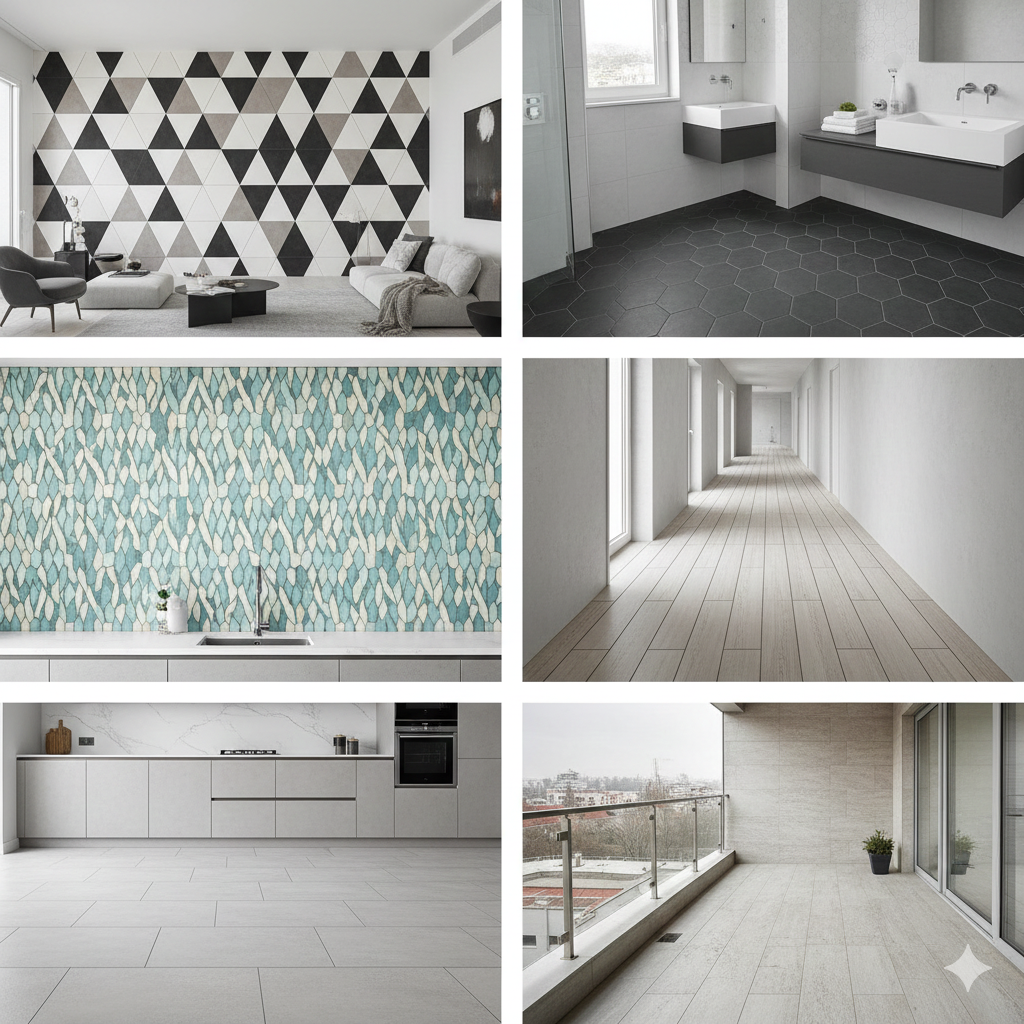
Many modern tile patterns blend creative shapes, bold geometry and clean visuals. These designs ensure that the rooms are open yet the space is a fashionable one. They tend to be preferred by young owners of homes and up-to-date businesses, as they have a refreshing atmosphere with no clutter.
-
Geometric tiles give a balanced look by repeating symmetrical shapes. They expand small spaces and stabilize the floors or walls. In living rooms, feature walls or commercial entrances, geometric tiles provide a strong visual identity.
-
The hexagon tile is very popular. The honeycomb design is also three-dimensional particularly on the floor. Even in small bathrooms or kitchens, hexagon tiles create movement without cluttering the area.
-
Mosaic tiles can also make a space look larger. Small patterns are made with soft shades and form a flowing gentle pattern that helps to support depth. Mosaic tiles work well on bathroom walls, shower areas or kitchen backsplashes.
-
Linear designs suit slim rooms well. The space is stretched because of tiles that are lined in long lines. The trend is effective especially in corridors, balconies as well as long kitchens.
-
Staggered tile patterns soften the harshness of straight lines. They subdivide narrow areas and provide a more natural flow. These designs are applicable on floors and walls, and it depends on the mood.
The process of selecting the appropriate mix may prove complex. That is why the Tilesview Visualizer allows users to combine appearances until the layout creates a feel of openness that s/he desires.
Choosing Tiles for Every Room
Each room has various requirements. What was a successful layout in a living room might not be in a bathroom. Knowledge of the behavior of patterns in various environments aids their users to make wiser choices.
-
In kitchens, subway or herringbone tiles make walls look taller. The backsplash has light colors that make the cooking area to be bright. Linoleum tiles or brick-style tiles are used as floors and extend the room and conceal minor imperfections.
-
The design of bathrooms is advantageous. Chevron tiles or mosaic patterns give depth to narrow shower walls. Opening of the space is further facilitated by light neutral tones. Even a small bathroom can be big with the right lighting of these tiles.
-
Corridors often feel narrow, so they need a tile layout that widens the walkway. Long tiles placed horizontally or staggered tile formats can make corridors appear wider. Brick effect tiles can also stretch a corridor visually.
-
Commercial areas often use bold patterns. Checkerboard tile styles add a classic yet open look. Geometric tiles can give a professional feel to reception areas or lobbies. These patterns help the area feel active and larger.
-
Living rooms benefit from flowing designs. Large hexagon tile layouts can transition between different zones. Linear tiles can make the space feel more open. Soft colors help the room feel relaxed and bright.
The Tilesview Visualizer lets users preview each of these applications. Instead of guessing, buyers can see the room with different tile patterns and decide what works best.
Color Choices That Enlarge Spaces
Color has a strong effect on how large or small a room feels. Even with perfect tile patterns, the wrong color can make a room feel closed in. Light tones tend to open up the room, while darker tones add depth when used correctly.
-
Soft neutrals such as whites, greys and creams reflect more light and help small spaces look brighter. These shades work well with linear tiles, subway tile patterns and geometric tiles.
-
Pastel colors like soft greens or light blues make rooms feel calm and wider. They pair well with mosaic tile patterns or hexagon tile layouts.
-
High contrast designs, like checkerboard tile floors, help create visual areas that seem deeper. The alternating colors draw the eye further across the room.
-
Glossy tiles reflect light which helps in tight spaces. When used with simple tile layout for small rooms, glossy surfaces can help double the visual sense of space.
The goal is to balance the tile design with the color combination. A good mix helps the room feel complete and spacious.
Application Tips for Real Projects
Before choosing any tile patterns, it helps to understand the room and plan the layout carefully.
-
Measure the room to understand its natural shape. Long rooms need patterns that widen them. Small square rooms need designs that bring depth.
-
Match the pattern with the purpose of the room. Bathrooms often need simpler designs because the space is tight. Kitchens can use bold patterns on walls but need softer designs on floors.
-
Balance the complexity of designs. If the tiles have a strong geometric pattern, use softer colors. If the tiles are simple, color can be more expressive.
-
Grout color matters more than most people think. Light grout blends the tiles and creates smooth transitions. Dark grout works well with checkerboard tile floors or mosaic tile designs by adding definition.
Use digital tools like the Tilesview Visualizer to test the layout. It reduces risk, helps buyers understand the look and supports better planning.
Why Choose Tileswale

Tileswale gives users access to a large marketplace of tile manufacturers, wholesalers, retailers and distributors. Instead of searching multiple stores, buyers can compare tile styles from many brands in one place. This helps users pick tile patterns that make their rooms feel larger, brighter and more open.
The platform also supports business growth by giving sellers a trusted digital space where customers can explore products easily. It helps build digital credibility and gives professionals a way to present their tile collections.
The Tilesview Visualizer on Tileswale makes design planning simple. Users can test herringbone tiles, hexagon tile patterns, chevron tile layouts, mosaic tile designs, checkerboard tile ideas and more. This helps them choose what works best before they buy.
Tileswale connects the entire tile industry on one platform and gives users the tools needed to turn small rooms into spacious, stylish spaces.
With the right pattern, color and layout, any area can feel bigger. Tileswale helps make that transformation easier for everyone.