

Ogee Countertop Edge vs Eased Countertop Edge
Do you think selecting the color of your countertop is the most challenging thing, buddy, hold your granite. Since in terms of completing your countertop the edge profile can do double duty as the unsung hero or the unwelcome scoundrel. And today, we're diving deep and with a bit of flair into the ultimate edge-off: the ogee countertop edge vs the eased countertop edge.
Let us be quirky. As we become educational. Here is an idea!
The Personality of the Profile
The edge of the countertop is not a small decoration. It is the period that comes with the full-faced sentence. There are those that desire a loud period and some a quiet exclamation point. Enter: the ogee edge and the eased edge.

An ogee edge is the one you’ve seen in luxurious kitchens, making granite look like it was imported from a Renaissance palace. It is curvy, it is elegant, and it is the red carpet of countertop profiles in some way.
On the other side of the ring, we have the eased edge. Simple. Understated. It is the shaved-headed hassle-free hairdressing of countertop profiles. At first you may not realize it, but your fingers will thank you after.
Getting to Know the Ogee Edge
The ogee countertop edge features an S-shaped profile, a subtle inward curve that glides into a soft outward curve. It is that sort of touch that makes things serious. And this is the twist in the plot of your kitchen, in case it were the plot of a novel.
Ogee edges work particularly well on thick slabs. If you’re going for a 3cm or thicker countertop, a double ogee edge is a striking option. The double ogee edge profile amplifies that classic S-curve into a dramatic statement, perfect for opulent granite or high-gloss marble.
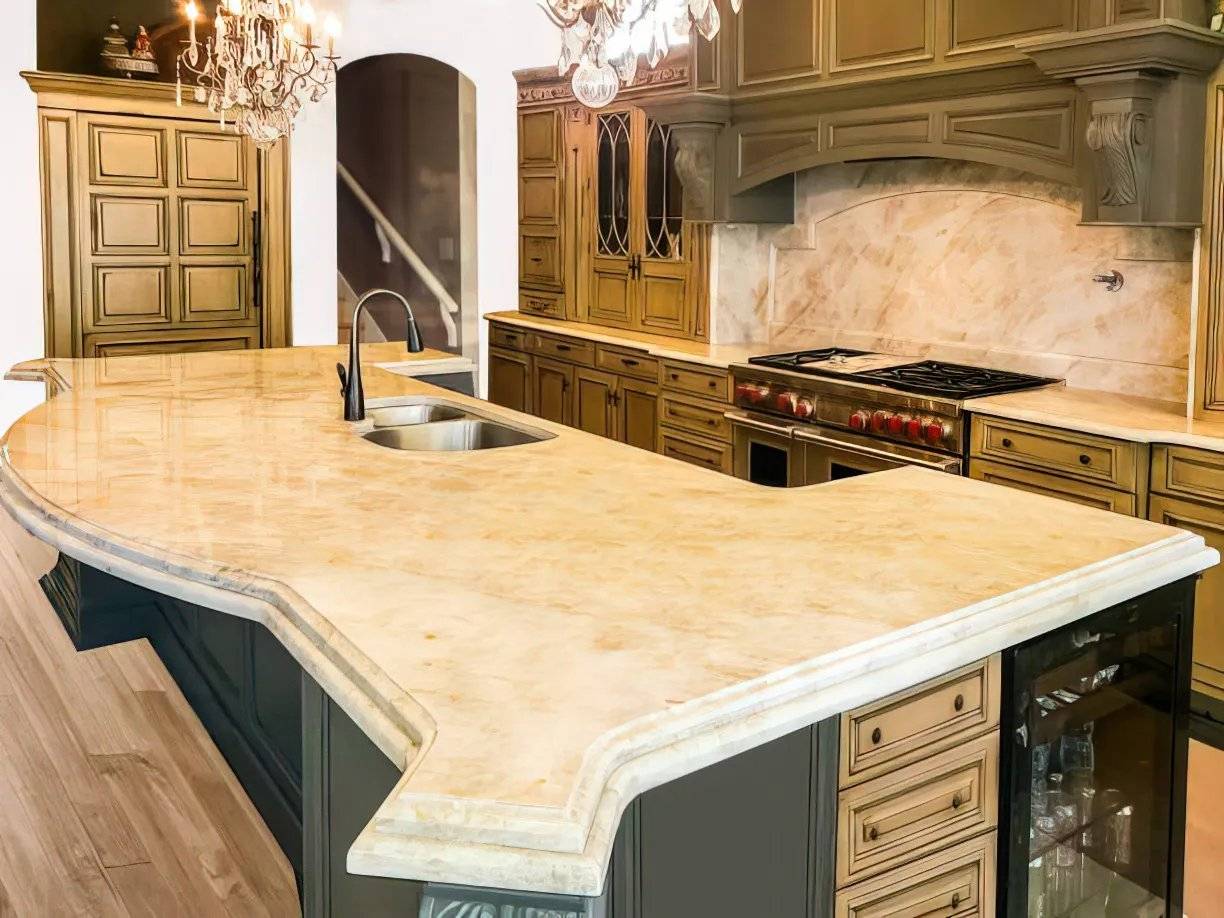
The differences, of course, are there. The cove ogee edge adds even more dimension and depth, while the ogee bullnose edge blends the traditional curve of the ogee with the smoothness of a bullnose finish. It’s drama and softness, all rolled into one sculpted profile.
But ogee isn’t just about the visuals. It can also add to the perceived value of your home. People walk into a kitchen and see those curves, and it whispers, “this countertop cost money.”
Enter the Eased Edge
Now, swing to the other side of the design pendulum and meet the eased countertop edge. It's basically the default go-to for people who love modern, minimalistic spaces.
An eased edge features a square profile with slightly rounded corners. It’s not trying to dazzle; it’s trying to be functional. That means fewer crumbs getting trapped, easier wiping, and a profile that won’t snag your shirt as you lean against the kitchen island.
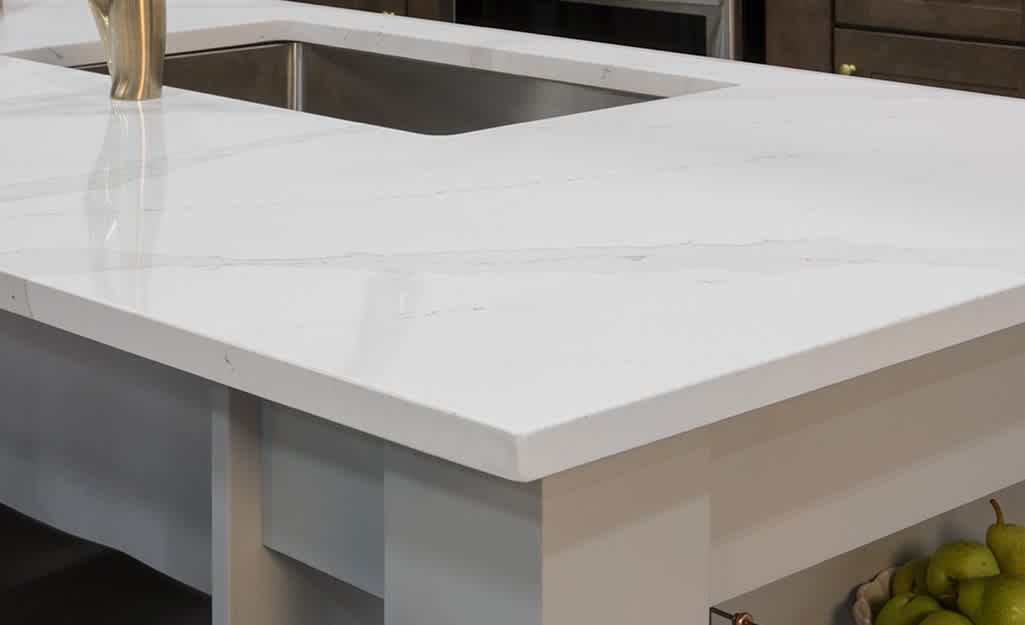
There are nuanced versions, too. The 1/8 eased edge countertop has a barely-there rounding, while a 3cm eased edge is more about giving that thicker countertop a quiet confidence. When used on materials like eased edge quartz or eased edge granite, the finish is slick, clean, and ultra-modern.
A good choice for families? Definitely. The slightly rounded corners make it more kid-friendly than sharp square cuts, while still keeping the aesthetic neat and contemporary.
Comparing Style Vibes
So here’s where it gets juicy.
The ogee edge screams luxury. It fits right in with raised-panel cabinets, chandeliers above the kitchen island, and wine racks built into the cabinetry. It's what you want when you're channeling French countryside or classic European charm.
On the other hand, the eased edge is pure function with a dash of quiet style. It pairs beautifully with flat-panel cabinetry, matte black fixtures, and maybe a subway tile backsplash. Think Scandinavian simplicity or modern farmhouse chic.
When your kitchen is tuxedo-ed, then ogee. In case of a made to measure minimalist suit, select eased.
Practical Details: Cleaning, Safety, and Others
Sure, the ogee countertop edge looks stunning, but those curves? They are dust catchers and collectors of spills. Cleaning a double ogee countertop edge isn’t the worst task in the world, but it’s not winning any awards for low-maintenance ease either.
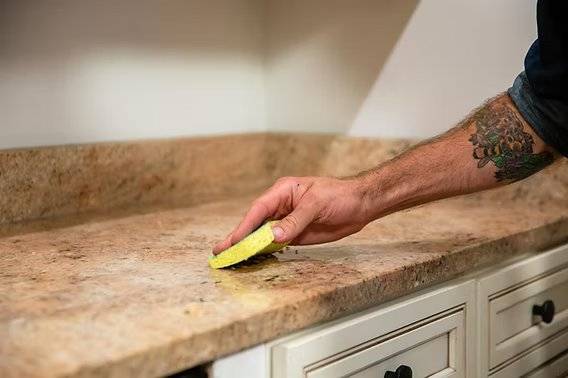
Meanwhile, eased edging? Why, it is a cleaning dream. There are no tight corners. Simply a smooth wipe and you are done. It is popularity in places where it is a must such as kitchens and commercial areas.
And safety? The eased edge granite or eased edge quartz finishes are gentle on hips and toddlers’ heads. And therefore imagine that you are a parent, or a person that occasionally makes a mistaken turn, and that little curve can spare you a few bruises.
What does Material Love which Edge?
Now let us discuss pairings. Just as cheese and wine together. Or socks with sandals (kidding).
Marble ogee edge looks divine. It completes the natural veining and texture soft feel of marble. It will be in posh washrooms and old-fashioned kitchens.
Granite edges ogee are timeless. The curves are used to enhance the speckles and difference in colors that serve to make every inch a piece of art in the granite.
But when it comes to modern stones like quartz, an eased edge quartz or mitered eased edge makes much more sense. It keeps things sharp, not wayward-looking, sharp as in the design sense and not in the boo-boo sense.
Why Does Slab Thickness Matter?
We already talked about it twice, and slab thickness is getting its time in the limelight.
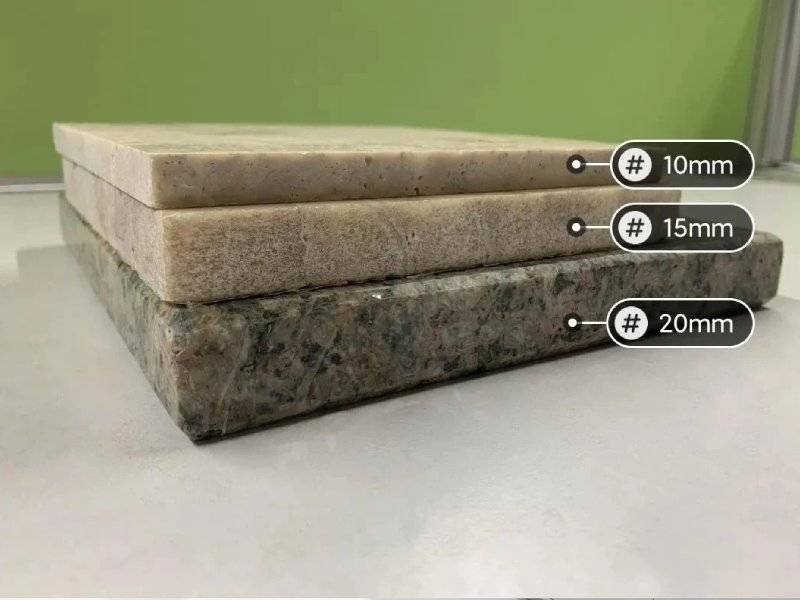
A 3cm eased edge adds a bold yet minimalist appeal. It makes the profile look down-to-earth but not too fat. It is suitable in modern kitchens which do not wish to have visual clutter.
Meanwhile, a double ogee edge or double ogee countertop edge works best on thicker slabs. Why? The detail must have breathing space. Trying to pull off an ogee on a skinny 2cm slab? That’s like trying to paint the Mona Lisa on a post-it note.
The Money Talk: Cost Differences
Let’s be honest. Ogee isn’t the most budget-friendly edge out there. It requires more precision, more polishing, and more time. The intricate S-shape of an ogee edge or even more so in double ogee edge profile adds to labor costs. So if you’re remodeling on a budget, you might want to limit ogee to key areas like the island.
The eased edge, however, is one of the most economical choices. It takes less time to fabricate and finish. You end up with finished look without those high labor charges.
Most Appropriate Places to Utilise Each Edge
Do you want to know where to apply them? Naturally you do not.
The ogee countertop edge belongs on center-stage pieces. Put yourself in big-kitchen islands, fancy vanities, and coffee bars in Pinterest homes.
The countertop edge eased is best for practicality zones. Kitchens, worktops, laundry rooms, or anywhere where simplicity is the main rule.
They can even be mixed. Go for ogee worktop edge on the island and eased edge everywhere else. It brings variety in what you see and does not disagree.
The Final Word: What Edge Are you?
Here’s the truth: both profiles bring their own magic to the table (literally).
If your heart says elegance, sophistication, and detail, then embrace the ogee countertop edge in all its curvy glory. It does not merely become a choice but it is a statement.
If you're team sleek, modern, and low-maintenance, the eased countertop edge will be your forever friend. Simple is never out of fashion.
Well then what? Florid gracing or spare muse? Curves or corners? Whether you go double ogee, cove ogee, or 1/8 eased edge countertop, just remember the edge isn’t a side detail. It is your finishing touch that will make your countertop yours.
And whatever edge you land on, Tileswale has got your back. Ready to get edgy?