


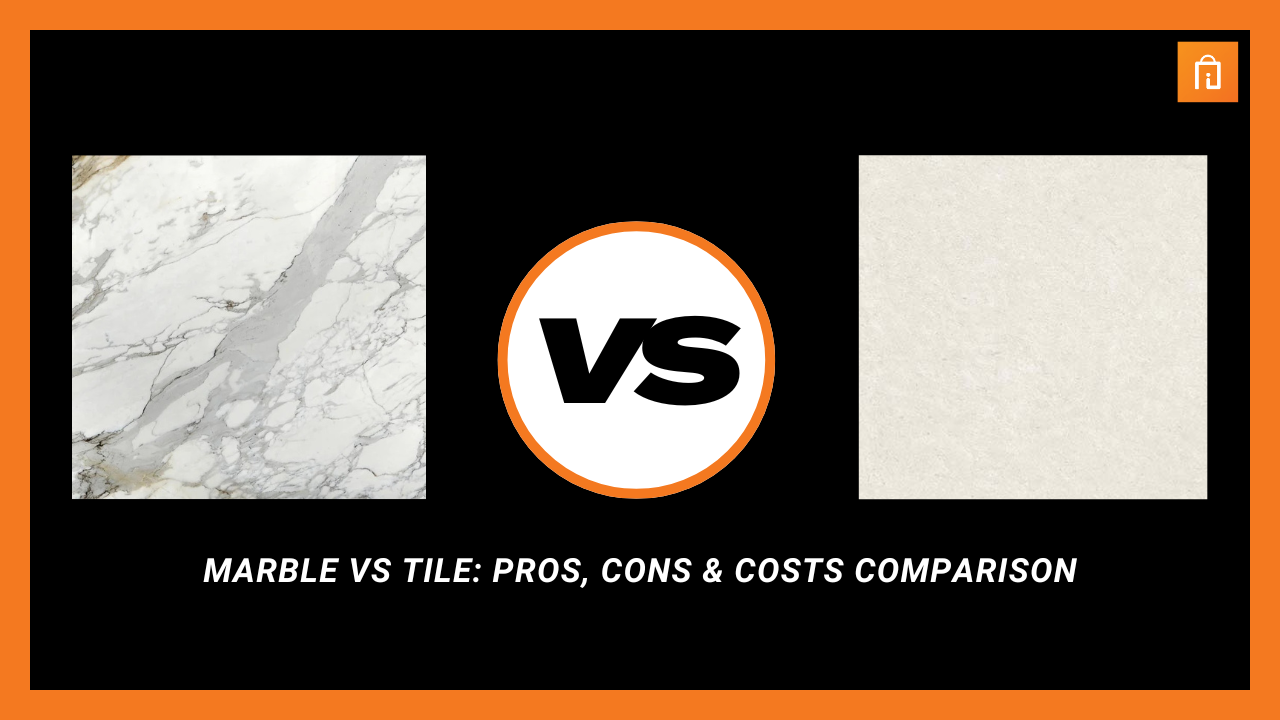
Marble vs Tile: Pros, Cons & Costs Comparison
Choosing the Right Surface
Choosing the appropriate surface to use on a home or a business is not about aesthetics only. It also has an affinity to comfort, safety, maintenance and long-term value. Floors and walls are subjected to the daily foot traffic, spills of water, movement of furniture and constant cleaning. Due to this fact, lots of individuals are lost in choosing between natural stone and fake one.
The first thing many customers will look at is the appearance of something. It is natural- a surface is able to create the atmosphere as soon as one enters the room. However, there is more than appearance, durability, upkeep, and cost have to be taken into consideration. There are materials which require regular attention; some are more permissive. They are cool and luxurious, others are practical and convenient to live with.
This analogy will remove that misunderstanding. It examines two popular choices natural stone and manufactured tiles used across homes, offices, hotels, and commercial spaces. It is not about putting either of them in the shade, but about demonstrating their real-life performance.
With the knowledge of how these materials perform in kitchens, bathrooms, living spaces and high traffic areas, you can make certain choices. The correct option will be determined by your way of life, money, and taste. There is no option that is always successful: only what best suits your space.
Everything About Marble Surface

Marble is a natural stone that forms deep in the earth over thousands of years. When limestone is heated and compressed, it turns into marble, giving it a smooth texture and unique, flowing patterns. All the slabs are unique and this contributes to its appeal.
People love marble for its natural elegance. It has been decorating temples, monuments, and old buildings over centuries. Its timeless quality is in that long history, few materials can possess. When installed correctly, it adds an instant richness to a room.
It usually comes in white, cream, grey and soft earth colors. The veins are either delicate and light or dramatic. Each installation is special because of these natural marks. Finishes emanate between the light-reflecting polishing and the textures that are rather soft and more matte.
Marble is common in living rooms, staircases, and feature walls, and some people even use it in bedrooms for its cool touch. Yet, being a natural material, it responds to acids and moisture easier as compared to manufactured ones. It is important to know its care needs before making its choice.
Understanding Tiles Today
Tiles are manufactured surfaces made from clay, minerals, and other natural materials. They are molded, baked in high temperatures and coated with different finishes. This is a controlled process that ensures that the size, color, and texture of batches are consistent.
A major advantage of tiles is variety. These are available in innumerable designs, pattern and finish. There are those that resemble natural stone or wood, and those that display modern graphics. The flexibility of them allows them to fit nearly every design theme, including minimalist homes and commercial interiors with bold designs.
Tiles are widely used on floors and walls. They are used in kitchens, bathrooms, corridors and outdoor areas as they do not stand up to water and stains. They are a pragmatic option in which they are used intensively every day.
Tiles can be glossy, matte, or textured. Small rooms can be opened with light shades, whereas darker colors can be added to give the room depth and drama. The quality is the same because they are factory made and it is easy to plan and install (particular when doing a large project and uniformity is a predetermined factor).
For many homeowners, tiles offer the right balance between appearance and convenience. They offer flexibility in design and do not require complex maintenance processes.
Comparison Between Appearance and Design
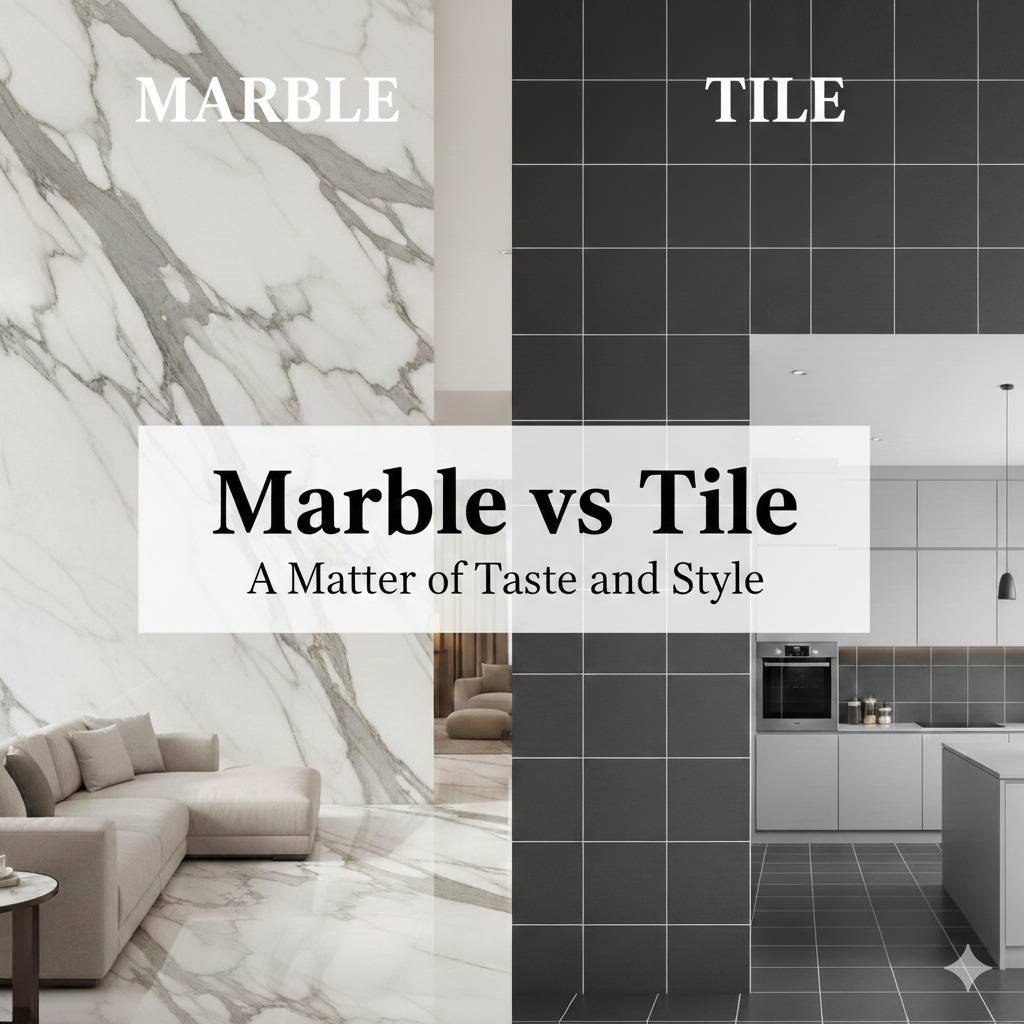
In terms of the looks, the two choices produce a different impression. Marble stands out with its natural patterns and organic flow. The veins have a free movement all over the slab, and it provides rooms with a soft, elegant, and never-artificial appearance.
Tiles emphasize precision and control. Shapes are evenly repeated, lines are straight, and the shades of color are constant. They also suit contemporary rooms, which appreciate symmetry and clean lines. They are frequently utilized by designers to make systematized, clean and symmetrical designs.
Light colored surfaces reflect more light thus making the rooms appear larger. Dark colours warm and make a person close. This may be true but the effect does not match between the two materials though they all lie in this spectrum. Marble feels fluid and artistic; tiles feel planned and contemporary.
Mood is also caused by finishes. Polished surfaces provide glamour and sophistication. The finishes of the matte are relaxed and delicate. Textured options have grip and character particularly in wet areas.
It is a matter of taste which of these looks to pick. There are those who like the beauty of nature that is varied; others want uniformity and freedom to design.
Durability, Maintenance and Use
Durability is of utmost importance where there is high usage- kitchens, hallways and commercial premises require surfaces that can withstand day to day stress. Marble is strong yet sensitive. It may mark and discoloured and acidic spill may mark without proper sealing.
Tiles are generally tougher in everyday conditions. They are more resistant to moisture, stains and chemicals and are used in bathrooms, kitchens and outdoor. All that is generally needed to clean is water and a light detergent.
The routines of maintenance are varied. Marble requires periodic sealing to protect its surface. Frequent treatment maintains its polish and avoids harm. It may also become worn out of its original finish with neglect.
Tiles need minimal upkeep. Liquids do not sink into their surface thus the stains stay on the surface and are easy to remove. This makes them favourable to families and business environments where time and effort are important.
It is important to know the amount of care you intend to give. The issue of durability is not only about strength, but also the ease at which a surface can be incorporated into a daily life.
Installation and Cost Breakdown
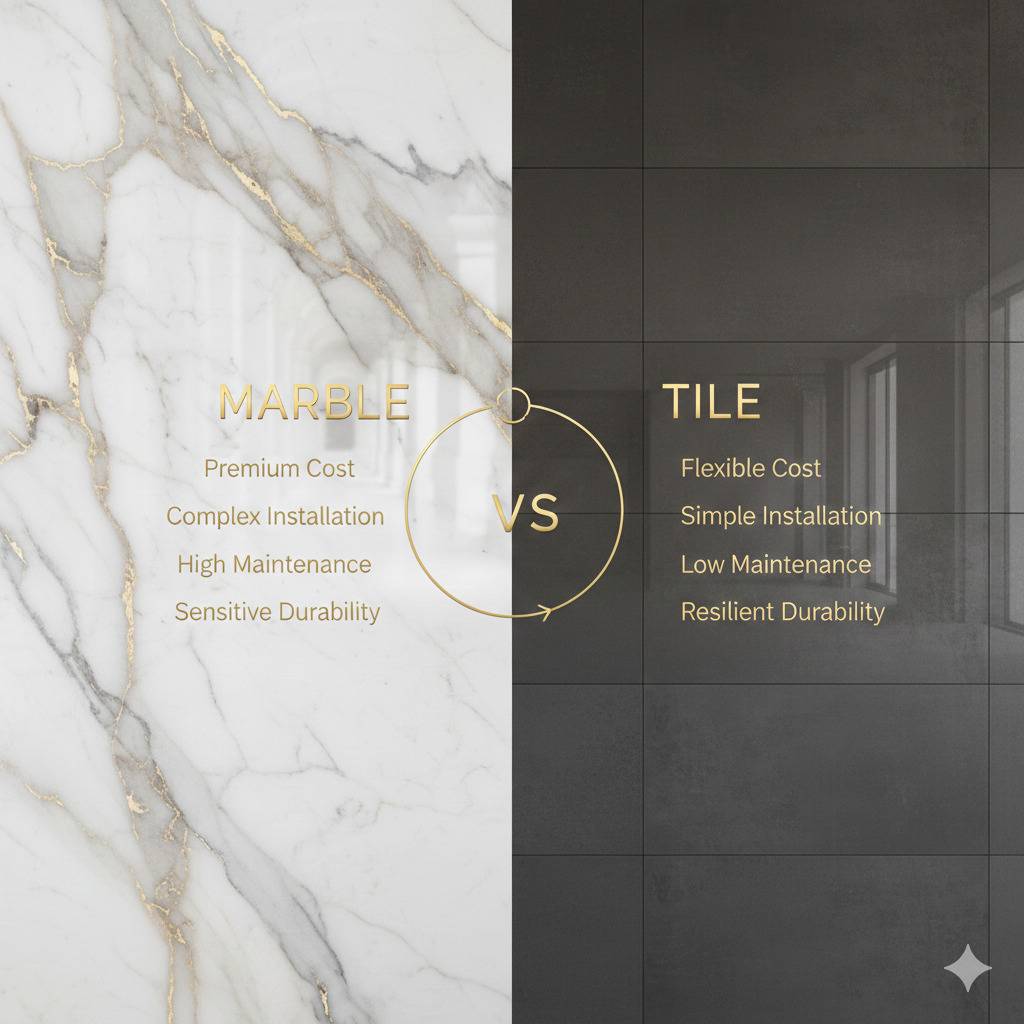
The cost is a significant factor of decision making. Marble typically costs more upfront because it is quarried, cut, and transported as a natural stone. During installation, highly skilled laborers are needed since the slabs need to be handled carefully and placed correctly.
Tiles offer more budget flexibility. They are available in a wide price range, allowing buyers to choose according to their budget. Installation is simpler and faster because of uniform sizes and lighter weight.
Installation costs also include surface preparation, adhesives, and finishing work. Marble installation often includes polishing and sealing after placement. This adds to overall cost. Tile installation is more straightforward and predictable.
Long term costs should also be considered. Repairing damaged marble can be expensive. Replacing individual tiles is usually easier and more affordable.
Here is a simple comparison overview:
Appearance: natural elegance versus controlled design Durability: sensitive versus resilient Maintenance: regular care versus low effort Installation: complex versus simple Cost range: premium versus flexible
Understanding both upfront and long term costs helps avoid surprises later.
Pros, Cons, and Final Verdict
Every material has strengths and limitations. Marble offers unmatched natural beauty and a sense of luxury. It works well in spaces where visual impact matters most. However, it demands care, attention, and a higher budget.
Tiles provide versatility and practicality. They adapt to different rooms and lifestyles with ease. Their durability and low maintenance make them suitable for busy homes and commercial use.
There is no right or wrong choice. The decision depends on how the space will be used, how much maintenance is acceptable, and what style feels right.
Some people choose marble for feature areas and tiles for functional zones. This balanced approach combines beauty with practicality.
The best surface is one that fits your daily life and long term plans. When chosen thoughtfully, both options can create spaces that feel comfortable, functional, and visually pleasing for years to come.