

Do You Really Need Tile Corner Trim- Pros and Cons Explained
Tiling can be compared to jigsaw puzzling on your floors and walls. You don’t want them to mismatch and you want them to remain firm even after many years. However, what of the edges? You know, do they just sit around there being embarrassing? That’s where tile corner trim comes in. But do you really need that? Does it warrant the additional time, money and effort?
Let’s dive deep into the world of tile trim and corners and see what the fuss is all about.
What Is Tile Corner Trim?
In simple terms, tile corner trim is the finishing touch for tiled surfaces. It is as though it were a border of a picture plain, smack, and cut. Wherever outside, exposed corners, wall ends are present, a layer of tile trim is usually installed in order to maintain orderliness.
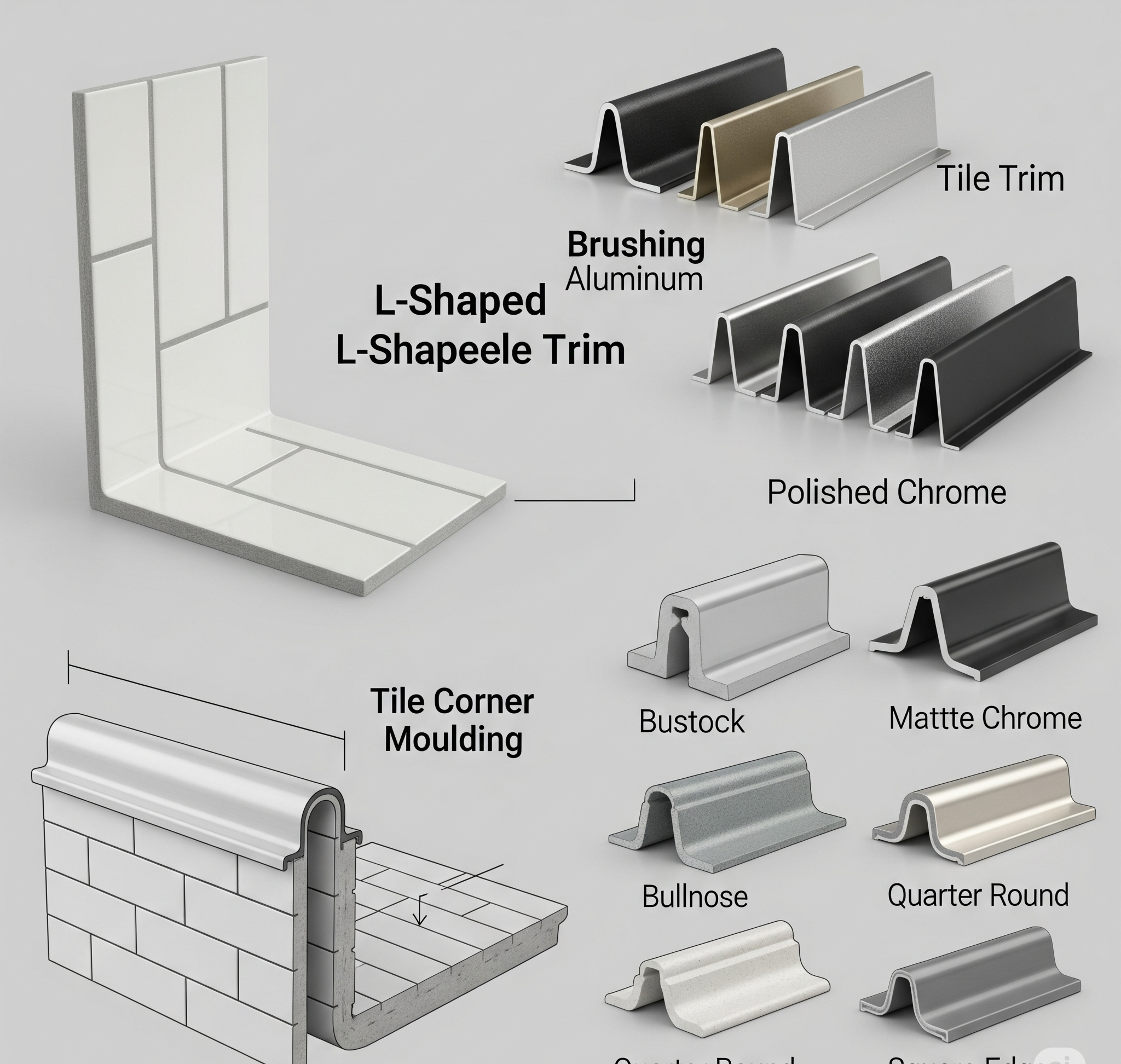
Examples of a few of the most common are as following:
-
L shaped trim – Great for external corners, offering a smooth 90-degree edge.
-
Metal tile trim corners – Durable, modern, and sleek.
-
Tile corner molding – Adds a classic, rounded edge.
-
Edge trim for tiles – Used around perimeters for protection and polish.
Tile trims aren’t just about looks, they help prevent chips, water damage, and tile movement.
What Is the Real Need of Tile Trim?
Be honest, not all tile works require corner trim. But there are those that benefit off of it. Here's when it’s worth considering:
-
Exposed Edges: If your tile ends in the middle of a wall or doesn’t go all the way to the ceiling, tile edge trim corners save the day. In their absence the edge of the tile will appear jagged and not finished.
-
Functional Corners: Corner or edge pieces on surfaces such as countertops, kitchen backsplash, or in a walk-in shower will get beaten up. Installing an outside corner tile trim can prevent cracks and chips.
-
High Moisture Areas: Especially in bathrooms, kitchens etc., moisture can creep into uncovered tile edges. Trim acts like a protective seal, keeping the tile's integrity intact.
-
Various Materials or Heights: It is common to lay tile onto different surfaces, such as drywall, wood, or carpet; in such cases, trims spring to the rescue to connect tile to other objects in a neat manner (and in an aesthetically-pleasing way).
In short, if you're aiming for durability and design harmony, trim can be a smart move.
Pros of Using Tile Corner Trim
Okay, so now onto the benefits. Why should you consider adding tile trim and corners to your project?
-
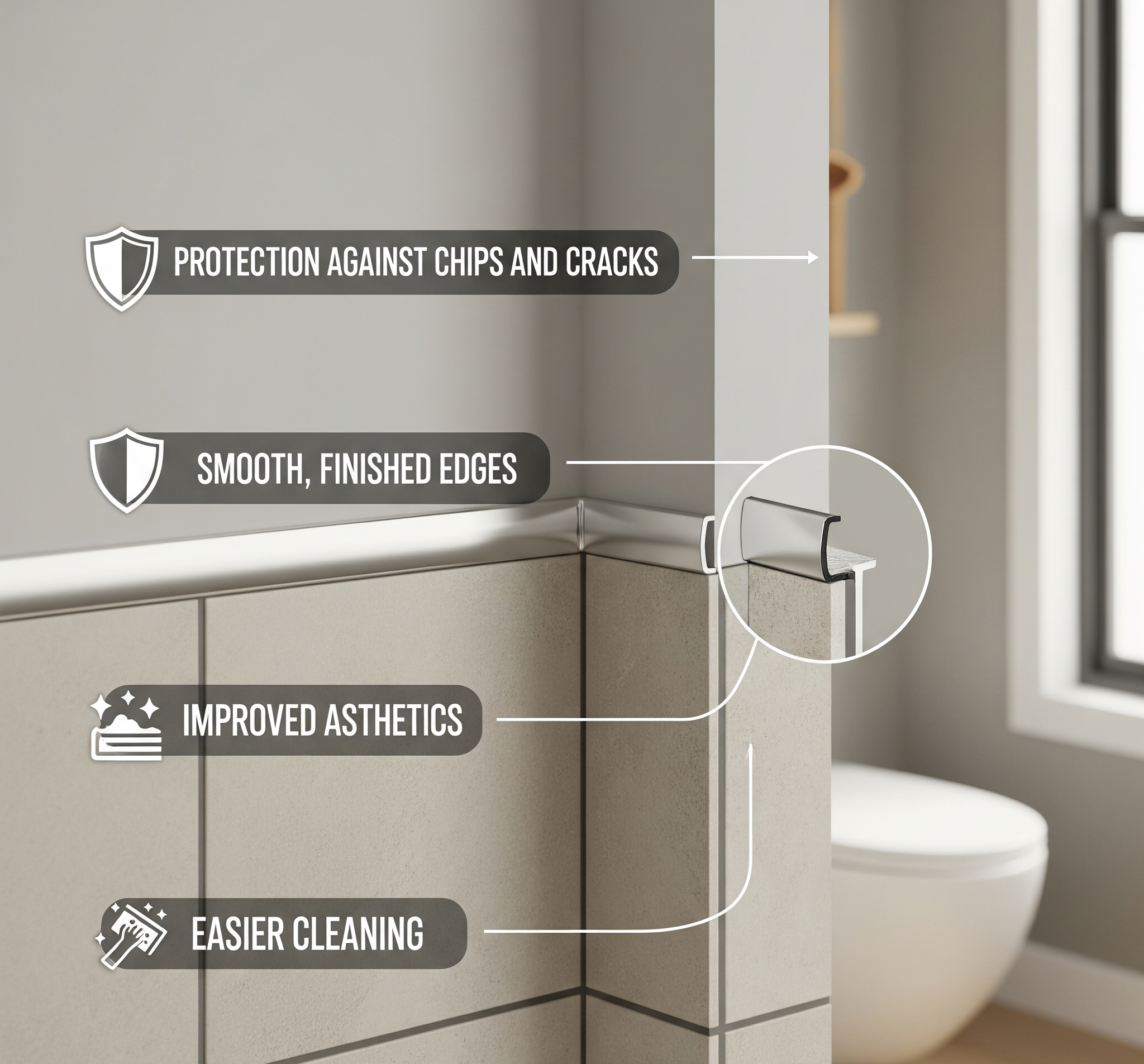
Cleaner Finish: Edge trims offer a crisp clean edge. They put a frame around your tile and make it come out. Consider it an eyeliner to your floor or the wall; it completes the overall style and makes it sharp.
-
Defense Against Destruction: Naturally corners are weak. That’s where tile corner molding or metal tile trim corners step in to save the day. They decrease both chipping and breaking, which is tantamount to increased tile life.
-
Water Resistance: Trim eliminates the possibility of water creeping through the edges of the tiles in wet regions. This implies that less water intrusion will result in reduced repair in future.
-
Design Enhancement: To have a unique outlook, you can make corresponding or contrasting these trim color. A black trimmed white subway tile? Works like a charm. Or do it low-key in beige or grey trim and keep it cool.
-
Flexibility of Materials: From plastic and aluminum to stainless steel and ceramic tile corner trim comes in various materials. One suits a particular convenience, either it is the look, the budget or the outdoor toughness.
The Disadvantages of Tile Trim You Need to Consider
Naturally, there is nothing ideal. So here is the other side of the trim coin.
-
Extra Cost: Trims may increase the cost of tiling overall, especially high-end metal tile trim corners or designer trims. Consider this when budgeting.
-
Added Labor: Trim installation requires precision. A poorly executed trim job can ruin the appearance of an otherwise beautiful tile installation. If you're hiring pros, expect a bit more in labor costs.
-
Style Lock-In: Once you select a type of trim and its color you’re likely to keep it until you redo the area. That can feel restrictive if your tastes change later.
-
Not Always Required: If tiles are framed naturally (like up against cabinetry or tucked under baseboards), adding a trim may be overkill.
Options to Using Trim
Possibly you’re not interested in using trim, or indeed you do not need to use trim in your project. That’s okay! These are some of the alternatives:
-
Mitered Edges: Crossing tile cuts at 45 degrees to form a neat corner. It looks sleek but takes skill (and some patience).
-
Bullnose Tiles: These tiles are rounded on the edges and can substitute separate trim. They mix well with trims but offer limited color choices.
-
Grouting or Caulking: Using caulk or grout on corner joints is a money-saving alternative. While effective, it is generally less durable and less stylish than a dedicated trim.
Selecting the Appropriate Tile Trim
Are you confused by having so much to choose from? Here's a simple way to narrow it down:
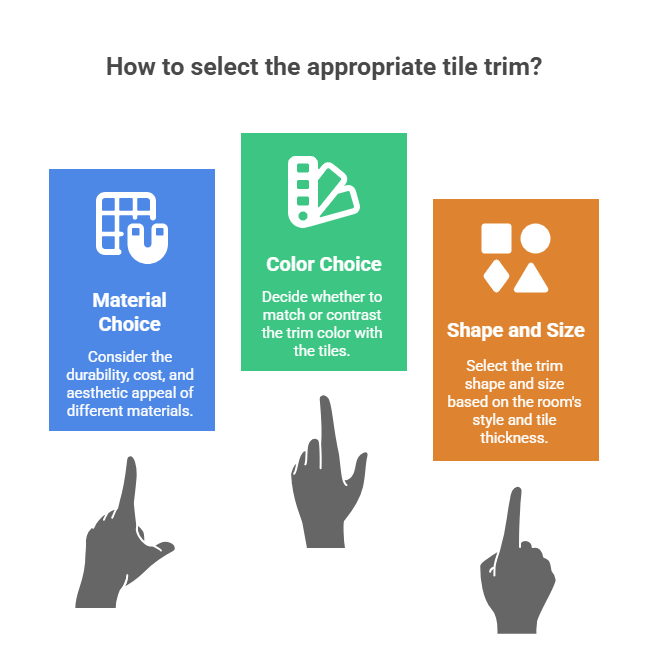
1. Material Matters
-
Plastic - Cheap, handy to deal with.
-
Metal - Contemporary, clean, long lasting. Stainless steel and aluminum are popular choices.
-
Ceramic - Works well with ceramic tiles, though it is more delicate.
2. Color Choice
-
Match - Use matching trim color for continuity.
-
Contrast - Use contrast as a statement. Think black trim on white tiles or gold trim on grey tiles.
3. Shapes and Size
-
Use L shaped trim for external corners.
-
Opt for rounded profiles in softer design settings.
-
Choose based on the room’s style, tile thickness, and your long-term vision.
Installing Tile Corner Trim: Quick Guide
Okay, so you’ve decided to go for it. Here’s a simplified step-by-step overview:
-
Measure Twice, Cut Once – Figure out how much trim you’ll need. Always buy a little extra.
-
Dry Fit First – Before gluing, place it along the edge to check length and alignment.
-
Use Tile Adhesive – Apply adhesive to both the wall and back of the trim.
-
Install Tile and Trim Together – Lay the trim and tile side-by-side, adjusting as needed.
-
Grout and Finish – Once everything’s dry, grout the tile and clean the trim surface.
For tricky corners or angles, you might need a tile corner moulding that’s flexible or adjustable.
To Trim or Not to Trim?
Here’s the bottom line. If you care about finishing details, want your tile work to last, and like a polished aesthetic, then yes, tile corner trim is worth it.
If you’re tiling a low-impact area, or you’re skilled with miter cuts and love a minimalist look, you might get away without it.
But for most homeowners and DIYers, trim is a simple way to protect your investment and enhance your space.
Why Choose Tileswale for Tile Trims?
When it comes to picking the right tile trim and corners, the market can feel like a maze. But here’s the secret weapon: Tileswale.
Tileswale is not just another tile marketplace, it’s a complete ecosystem that brings you the best brands, manufacturers, and tile trim suppliers under one digital roof. With easy browsing, expert recommendations, and a wide variety of trims, from L shaped trim to external corner tile trim, you’re in good hands.
Their platform also includes a smart search feature, perfect for finding exactly what you need, fast. Want black or metal trim? Done. Need help choosing between tile corner molding or bullnose edges? Tileswale’s got tips and visuals to help you make confident choices.
So whether you’re a pro tiler or a first-time renovator, Tileswale helps you level up your tile game.
Ready to transform your corners into style statements? Let Tileswale guide your way, because good design doesn’t stop at the edge.